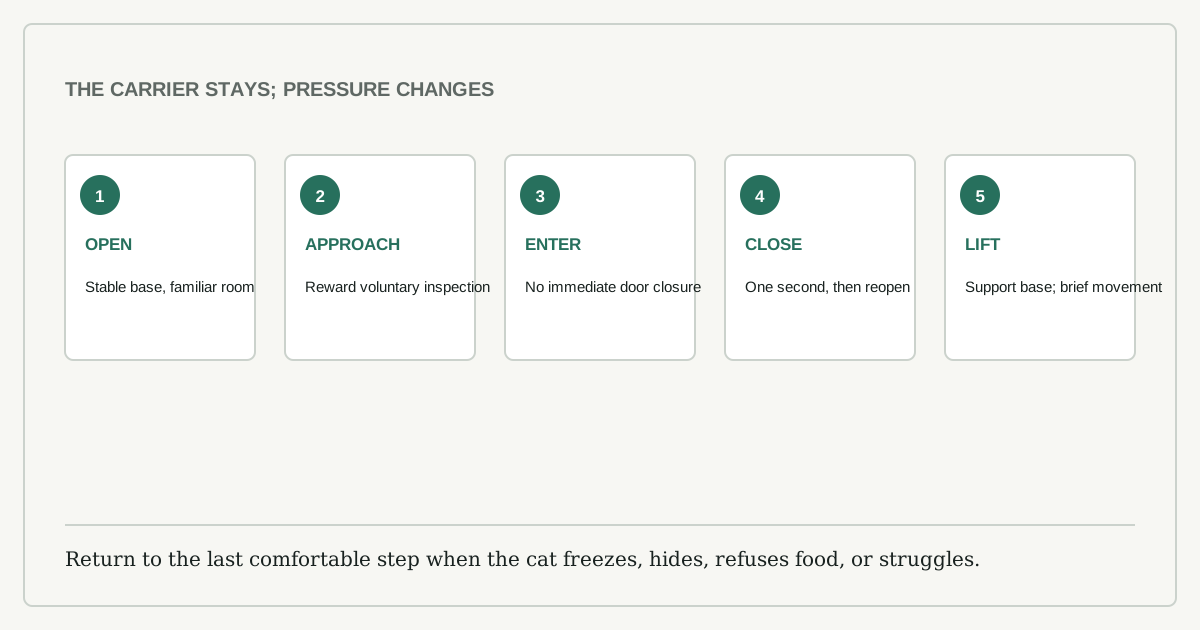
If the carrier appears only before a car ride, the cat has learned an accurate warning. The useful change is not a stronger chase technique on appointment morning. It is to make the carrier ordinary weeks beforehand, then build a sequence the cat can leave at any time: look, approach, enter, rest, tolerate a brief door movement, and finally move a short distance. This does not guarantee a stress-free trip, and a cat with urgent medical needs should not have care delayed for training. It does give routine visits a calmer starting point.
The carrier itself comes first
A sturdy carrier with a removable top or large top opening gives the veterinary team more options. A frightened or painful cat may be examined in the lower half rather than pulled through a narrow front door. Check every latch, hinge, screw, and seam. The carrier should not flex open when lifted, and the base should support the cat's full weight.
Clean old urine, vomit, and strong disinfectant smells according to the manufacturer's instructions. Add a familiar washable towel or thin bed that does not bunch under the door. Set the carrier in a quiet room where the cat already rests, with the door secured open so it cannot swing or trap a tail.
Do not begin by placing the cat inside. For several days, the carrier is furniture. Put familiar bedding beside it, then at the entrance, then just inside. If the cat avoids the whole area, increase distance and remove pressure.
Six separate behaviors, not one forced event
Treat each step as complete only when the cat approaches with a loose body and can leave without being followed.
- The cat looks toward the carrier while remaining relaxed.
- The cat approaches the entrance.
- The front feet enter.
- The whole body enters and turns.
- The cat stays briefly while the door moves a few centimetres.
- The closed carrier is lifted level for one second, then returned.
Use small food rewards, play, or bedding the individual cat values. Never withhold food outside the cat's normal plan to force entry, and ask a veterinarian before changing feeding for a cat with medical needs. End while the cat is still comfortable. One quiet repetition is more useful than ten attempts that end in hiding.
Distance and recovery are the useful signals
The earliest warning may be a frozen stare, weight shifted backwards, flattened ears, tail tucked close, rapid grooming, or leaving the room. Record the step that caused the change and how long the cat takes to resume normal activity. Recovery is part of the measurement. A cat that takes an hour to return after the door clicks was pushed much further than a cat that immediately re-enters.
| Step | Comfortable response | Signal to step back |
|---|---|---|
| Carrier visible | Normal room use | Avoids the room |
| Food near entrance | Eats and leaves freely | Stretches forward without approaching |
| Door moves | Remains loose and oriented | Freezes, bolts, or stops taking food |
| Base lifts | Weight stays settled | Scrambles or presses against an exit |
Do not interpret stillness as consent. A motionless cat with a tense body may be frightened rather than calm.
Transport practice without a trip
When the cat is comfortable with the closed door, support the carrier underneath with both hands. Carrying only by the handle can make it swing. Lift, set down, reward, and open. Later, walk to the hall and back. Cover part of the carrier with a familiar towel if that helps, while keeping ventilation clear.
For car practice, secure the carrier according to the carrier and vehicle instructions. Start with the stationary car, then a very short journey that does not end at the clinic. Temperature, airflow, and safe restraint matter more than entertainment. Never open an unsecured carrier in a car or car park.
Ask the clinic whether it has a quiet waiting option and whether the removable top should stay attached. For a cat with severe fear, motion sickness, pain, or a history of dangerous escape attempts, contact the veterinary team before the visit. They may recommend a tailored transport or pre-visit medication plan.
Appointment-day setup
Prepare records, payment, route, and parking before handling the cat. Keep the carrier open in its normal location until departure. Place an absorbent layer under the familiar towel, bring a spare, and label the carrier discreetly with contact information. Synthetic feline pheromone products may be used according to their label and veterinary guidance; they are not a substitute for gradual familiarity or secure equipment.
After returning, clean only what is needed and put the carrier back in the room. Do not make it disappear until the next appointment. The long-term objective is simple: the carrier should predict resting, treats, and brief ordinary movement far more often than it predicts restraint and travel.