A fountain is the answer to "my cat doesn't drink enough" roughly as often as a new mattress is the answer to "I can't sleep." Sometimes. Not usually first.
Most cat water problems are layout problems wearing a product costume, and three days with two ordinary bowls will tell you which one you have.
This is about setup: a bowl the cat ignores, splash, crumbs in the water, a litter box everyone tiptoes around. A cat who suddenly drinks much more or much less, strains, urinates outside the box, vomits, or stops eating is a veterinary question and not a shopping one — and those signs are the reason to notice water at all.
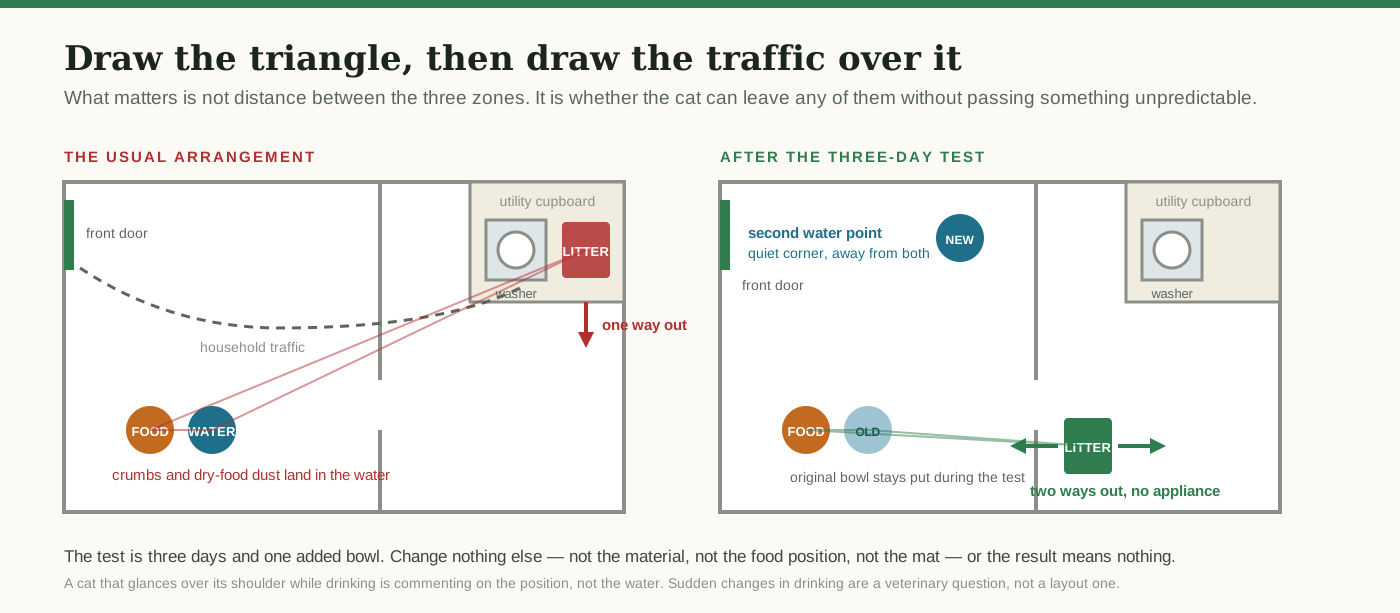
Draw the triangle
Sketch the flat, badly, on the back of something. Mark three points: water, food, litter.
Now draw the traffic over the top. The front door. The washing machine. The route the dog takes. Where a child runs. Where you stand when you are cooking. Where you go to clean.
What you are looking for is any point of the triangle that sits in a corridor, next to something that starts up without warning, or in a spot with only one way out. Cats will tolerate an imperfect layout for a long time and then stop, and the thing that tips it is usually escapability rather than distance.
The best layout is rarely the tidiest one.
Three days, two bowls, nothing bought
Leave the existing water source exactly where it is. Add a second bowl — wide, shallow, stable, something you already own — somewhere quiet, away from both the food and the litter.
Do not change anything else. Do not switch bowl materials, move the food, or buy a mat. One variable.
Fill both to the same level each morning and look at them each evening. That is the whole experiment.
What you are actually recording
Not millilitres. You are not measuring hydration, and a bowl loses water to evaporation and to a dog you did not see.
You are recording behaviour: whether the cat approaches without hesitating, whether the whiskers touch the sides, whether the cat looks over its shoulder while drinking, and how quickly hair, dust and food debris collect in each spot.
The shoulder-check is the informative one. A cat that keeps glancing behind itself while drinking is telling you something about the position, not about the water.
If the quiet bowl gets calm visits and the original does not, the location was the problem and you have just fixed it for nothing. If both are ignored equally, the next things to look at are freshness, bowl shape, general household stress — and, if anything else has changed, the cat.
The litter box decides more than you think
A covered box next to the food mat. A box beside a washing machine on a spin cycle. A narrow cupboard with one exit and a door that sometimes closes.
Any of those can make an entire area feel unsafe, and cats generalise the feeling outward rather than isolating it. So a cat avoiding the water is often a cat avoiding the corner, and the corner is unpleasant because of the box three feet away.
Fix zones separately, and never let one zone become the price of another. Food should not be the compensation for a bad litter location — that trade is how a mild avoidance problem becomes a house-soiling problem.
The usual guideline is one box per cat plus a spare, in separate places. A single box in a two-cat flat is a layout fault, not a preference.
When a fountain is genuinely the right purchase
Two situations. The cat has demonstrated a preference for moving water — drinking from taps, from the shower floor, from a watering can. Or a vet has asked you to push intake for a specific reason: kidney disease, urinary issues, a cat on dry food with a history.
In both cases a fountain can do real work. Neither is "the cat seems a bit uninterested."
The maintenance nobody prices in
Before buying, look for the things a product photo is designed to hide: whether the pump comes apart without a tool, whether every water-contact surface can be reached by a brush, what replacement filters cost over a year, how loud it is at 3 a.m. in a small flat, and where the cord ends up running.
A neglected fountain is meaningfully worse than a clean bowl — warm, still, biofilmed water in a container nobody wants to disassemble. If the honest answer is that you will clean it weekly for a month and then monthly, buy the second bowl instead and put the money towards the vet's scale.
The setup that works is the one that survives a bad week. If bowls and food storage are the wider question, the feeding station piece covers the parts that apply to dogs too.