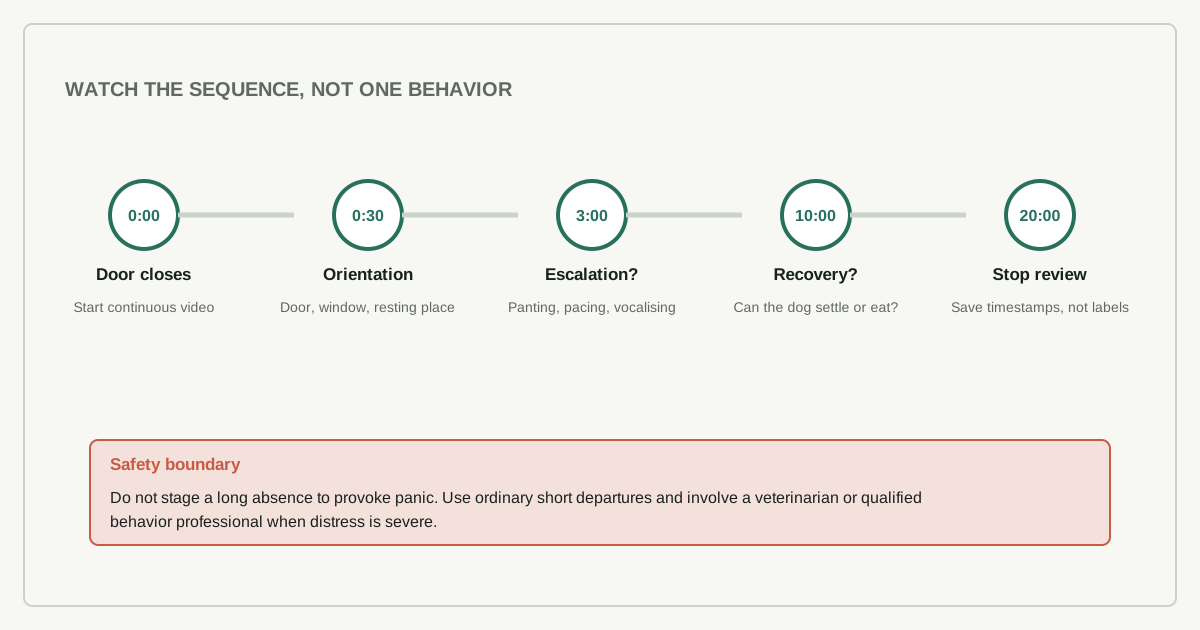
A chewed cushion after work tells you what happened, but not when or why. A short recording of the first part of an ordinary absence is more useful because timing separates several very different problems. A dog that settles, then barks at a delivery van needs a different plan from a dog that begins pacing when keys move and scratches the door seconds after it closes. The recording is not a diagnosis. It is a structured observation you can bring to a veterinarian or qualified behavior professional, and it can stop you from testing longer absences when the first minutes already show distress.
One ordinary departure, recorded continuously
Use a phone, pet camera, or laptop that records both the main resting area and the exit the dog watches. Do not stage a dramatic test. Choose a normal time, follow the usual departure routine, and keep the absence short enough that you can return promptly. Remove choking hazards, block unsafe windows or balconies, and do not confine a dog in a crate if the crate itself has been associated with panic or escape attempts.
Before leaving, write down four times: when preparation begins, when the door closes, when the first notable behavior appears, and whether the dog settles. Keep the camera clock visible. If another household sound is likely - lift doors, hallway footsteps, a neighbor arriving - note it rather than assuming every bark is caused by separation.
Do not call to the dog through the camera. A disembodied voice can interrupt the sequence or increase searching. The goal is to observe the routine that already exists.
Behavior makes sense as a sequence
Start with the minute before departure. Pacing, panting in a cool room, following closely, trembling, salivating, hiding, or refusing a normally valued treat can show that arousal begins before the dog is alone. After the door closes, look for clusters: repeated travel between the exit and windows, persistent vocalizing, escape-directed scratching, inability to take food, or a fixed pacing route.
One yawn or one bark is not enough. Context matters. A dog may bark once at a corridor sound and return to bed. Another may alternate between howling, door contact, and frantic movement without a pause. Record what the body does, how long it lasts, and what happened immediately before it. Avoid labels such as "stubborn" or "guilty"; those do not describe an observable event.
| What appears on video | Useful note | What not to conclude |
|---|---|---|
| Bark, then settle | Trigger time and source if visible | One bark proves separation anxiety |
| Repeated exit checking | Frequency and duration | The dog is being manipulative |
| Food ignored | Whether food is taken after return | A puzzle feeder will fix the problem |
| Scratching at an exit | Contact time and any injury | More secure confinement is automatically safer |
What do the first 20 minutes decide?
If the dog settles comfortably, the clip gives you a baseline. Repeat on another ordinary day before treating one recording as typical. If distress begins within seconds or minutes, do not extend the next test to see how bad it becomes. The useful result is the threshold: the earliest departure cue or absence duration that changes the dog's behavior.
If behavior starts only after an outside event, investigate that event. Move the camera, close a visual line to the hallway, or compare a quieter time of day. If pacing, vocalizing, house soiling, or destruction also happens while people are home, separation may not be the only explanation. Pain, incomplete house training, noise sensitivity, and other medical or behavior conditions need to be ruled out.
Create a plain log with date, departure time, first signal, strongest signal, settling time, food response, and outside trigger. Three short observations are more useful than a week of vague impressions.
What should stop a home experiment
End DIY testing and contact a veterinarian promptly if the dog injures teeth, nails, paws, or skin; collapses; vomits repeatedly; has breathing difficulty; or shows a sudden behavior change. Escape attempts around doors and windows can cause serious injury. A veterinarian can check medical contributors and discuss whether referral to a veterinary behaviorist or qualified reward-based professional is appropriate.
Do not punish damage or elimination discovered after returning. The dog cannot connect delayed punishment to an event that happened during the absence, and adding fear to departures can worsen the pattern. Do not use shock, spray, or noise devices to suppress vocalizing. Silence is not the same as reduced distress.
Turn the recording into a useful handoff
Save a short representative clip, not hours of footage. Add the written timeline and a sentence describing what you want help with: "Pacing begins 40 seconds after the door closes, food is untouched, and scratching starts at two minutes." Include medication, recent schedule changes, moves, losses, and whether the behavior occurs when someone remains at home.
The best outcome from the first recording is not a label. It is a narrower next step. You may discover a hallway trigger, a departure cue that needs careful work, or distress severe enough that professional support should come before another absence. That is useful evidence, and it protects the dog from becoming the subject of progressively harder tests.