Let's start with the part the packaging won't tell you: a harness does not teach your dog to walk nicely. It manages pulling while you teach that separately. Buy one expecting a training outcome and you'll be disappointed in about a week, then blame the harness.
What a harness does change is where the leash pressure lands, and that's worth getting right.
Back-clip, front-clip, dual-clip
A back-clip harness puts the attachment between the shoulder blades. It's comfortable and escape-resistant, and it gives you almost no steering — a determined dog can lean into it the way a sled dog leans into a rig. Fine for a dog who already walks well, or for a long-line sniff walk where pulling isn't the issue.
A front-clip harness attaches at the chest, so when the dog moves forward the leash turns them gently back toward you. That redirection is the whole point, and it genuinely takes the physical strain out of a strong dog's pull.
Dual-clip harnesses give you both rings. If you're unsure, this is the sensible buy — you can experiment without a second purchase.
Where front-clip designs go wrong
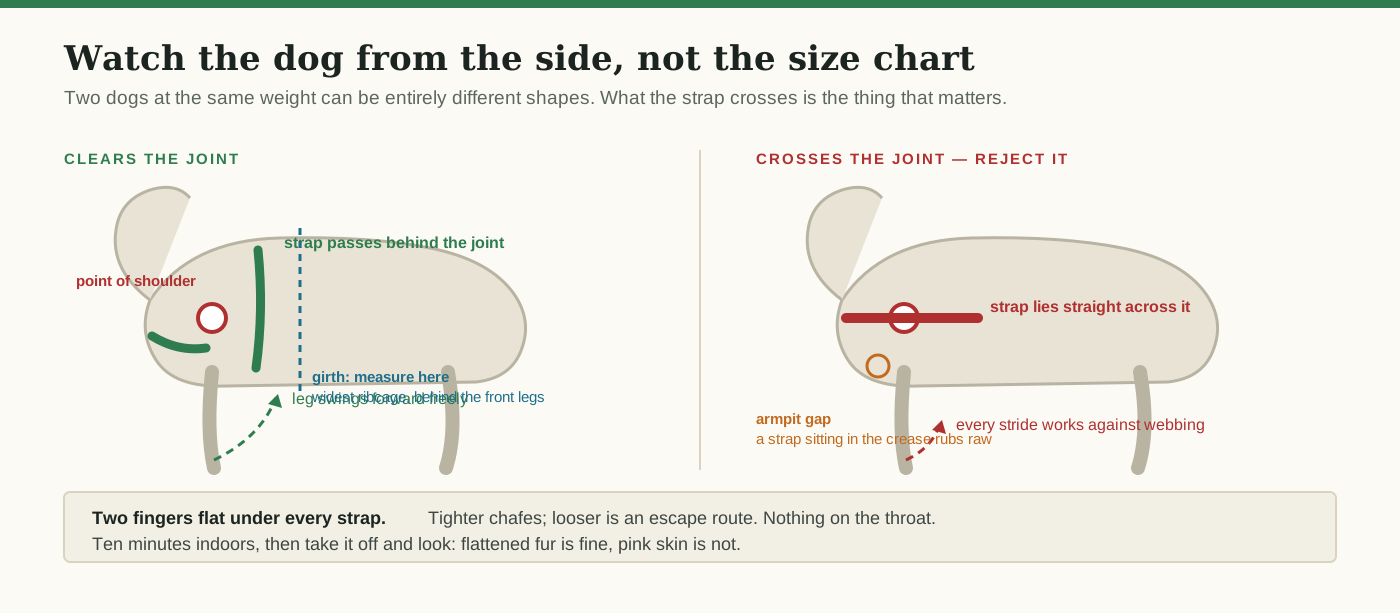
Here's the caveat that gets skipped. A front-clip harness only behaves well if the chest strap sits across the breastbone and the shoulder straps stay clear of the point of the shoulder. Cheap designs run a strap horizontally across the front of the shoulder joint, and every step the dog takes is now working against a strap. Over months of daily walks, restricting the shoulder's reach is not something you want to discover after the fact.
Look at the dog from the side while they walk. The front leg should swing forward freely. If a strap is riding over the shoulder joint and moving with each stride, that harness is the wrong shape for that dog — regardless of what the size chart said.
Fitting: two fingers, and the armpit check
Measure the girth just behind the front legs, at the widest point of the ribcage, and use the maker's chart rather than guessing from weight. Two dogs at 20 kg can be entirely different shapes.
Then fit it on the dog:
- Two fingers should slide flat under every strap. Tighter and you'll chafe; looser and you've built an escape hatch.
- Check the armpit gap. A strap that sits right in the armpit crease will rub raw on a long walk — you want clearance there.
- Nothing should press on the throat. Pressure belongs on the chest and ribs.
- Walk them in it indoors for ten minutes and then take it off and look at the coat and skin. Flattened fur is fine. Pink skin is not.
The escape question is separate
Fit for comfort and fit for security are two different tests, and anxious or slim-headed dogs pass one and fail the other. A dog who backs up hard, ducks the head and reverses out is telling you the harness geometry is wrong for them, not that you should tighten everything by an inch. Look for designs with a third strap behind the ribcage. Test escape risk in a hallway or garden — never on a road for the first time.
What about head halters, and what about cats
A head halter (the type that loops over the muzzle) gives the most control of anything short of a professional, because it steers the head. It also needs proper conditioning — most dogs hate it initially and will paw at it — and a short leash with a hard jolt can wrench the neck. It's a specialist tool for a genuinely strong dog with an owner willing to spend two weeks introducing it, not a shortcut.
Cats are a different problem entirely. A collar is an escape route, not a walking system: cat harnesses need to be a vest or H-style design with a snug fit, and even then a startled cat can reverse out of most of them. Fit indoors, let them wear it with no leash for days before you attach one, and accept that some cats will simply lie down and refuse. That's an answer, not a failure.
What actually fixes pulling
Reward the position you want, before the leash goes tight. Stop moving when it does, and start again when the leash softens. It is boring and it works, and it works faster with a harness that takes the pain out of the process so you can be patient.
If pulling comes with lunging, fixation, or panic at the sight of other dogs, that's not a hardware problem. Get a reward-based trainer or behaviour professional involved, and check with your vet that nothing hurts — pain and pulling look similar from the other end of the leash.
Buy for shoulder clearance and a fit you can verify with two fingers. Everything else on the box is marketing.