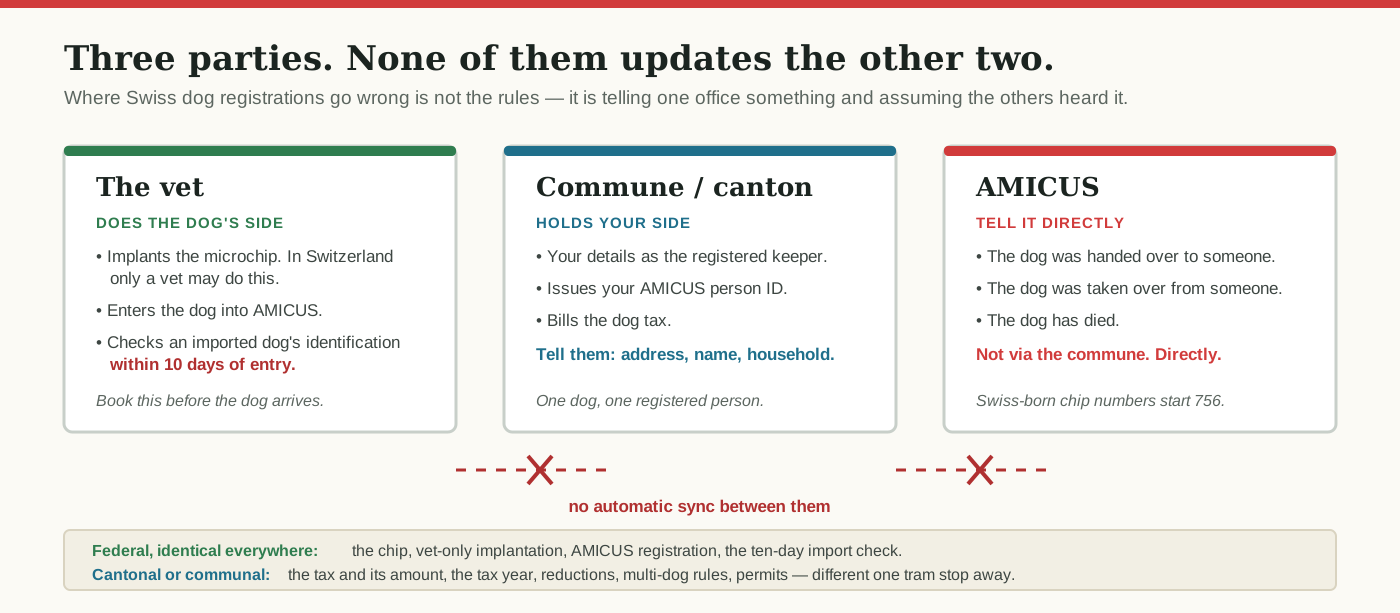
Nobody gets this wrong because the rules are harsh. They get it wrong because the paperwork is split between three parties who each hold one piece of it, and none of them updates the other two on your behalf.
Work out who holds what, and the rest is an afternoon.
Three parties, and none of them tells the others
The vet does the physical part and the database part. In Switzerland a microchip may only be implanted by a veterinarian, and it is the vet — not you — who enters the dog into AMICUS, the national dog register.
Your commune, or the cantonal veterinary office, holds your details as keeper, and bills the dog tax. Change your address, your name, your household, and that goes to them.
AMICUS itself is where the dog's own life events go: a dog handed over to someone else, a dog taken over from someone else, a dog that has died.
The failure mode is predictable. People update one and assume it flows to the others. It does not. Someone moves canton, tells the commune, and the dog stays associated with an old address in the national database — which is discovered on the day the dog goes missing, which is the worst possible day to discover it.
Your AMICUS ID has to exist before the chip does
This is the sequencing detail that catches almost every first-time owner, and it runs backwards from what you would guess.
A Swiss breeder will typically ask for your AMICUS person ID before implanting the puppy's chip, so the dog can be registered directly to you. But you get that ID by registering the dog with the authorities — a dog that does not yet have a chip number.
Basel-Stadt's online form handles this with a small piece of pragmatism worth knowing about: for a Swiss-born dog you enter fifteen zeros in the chip-number field, submit, and the ID comes back. Processing takes roughly three working days. For an imported dog the form will not accept that — a real chip number is compulsory, because the animal already has one.
Chip numbers for dogs born in Switzerland begin with 756. If you are looking at a "Swiss" puppy whose chip number starts with something else, you are looking at an imported dog, whatever the advertisement said.
The registration itself has to be done before the breeder hands the puppy over, not afterwards.
Ten days, counted from the day the dog becomes yours
For an imported dog the federal rule is explicit: the keeper must have the dog's identification checked by a vet within ten days of entry, and reported to AMICUS.
Basel-Stadt applies the same ten-day window to the tax registration side, counted from taking the dog over. Two separate obligations, one deadline, and it is short. Ten days is not "that month" — it is a week and a half, most of which people spend buying beds and worrying about house-training.
Book the vet appointment before the dog arrives. That single act removes almost all of the risk in this article.
One dog, one name
A dog may only be registered to a single person. If two names go on the form, the first one is taken and the second is ignored.
That sounds trivial and is not, because the registered keeper is the person the system considers responsible, the person billed, and the person contacted. Households where the dog is genuinely shared should decide deliberately who that is rather than discovering the answer on an invoice.
What does a dog actually cost per year in tax?
Cantonal and communal, so the answer depends entirely on your address — which is the honest headline of this whole subject. Basel-Stadt is a usefully concrete example because it publishes the figures plainly:
| Annual dog tax | |
|---|---|
| City of Basel | CHF 160 |
| Riehen | CHF 150 |
| Bettingen | CHF 120 |
Three communes, one small canton, three different numbers. Any article that tells you what "Switzerland" charges for a dog is guessing.
Two details that surprise people. The tax year does not follow the calendar: in Basel-Stadt it runs from 1 April to 31 March. And every additional dog in the same household is taxed at double — CHF 160 for the first, CHF 320 for each one after that, and that applies even when the second dog belongs to somebody else living at the same address. Beyond two dogs per household you need an annual permit from the cantonal veterinary office, currently CHF 40.
So the second dog is not "another 160 francs." It is three times the first dog's bill, arriving on one invoice.
The reduction most people assume they get
Basel-Stadt grants a 70% reduction to recipients of Ergänzungsleistungen or Fürsorgeleistungen, on the first dog in the household only.
An AHV or IV pension does not qualify. That is the assumption that gets made most often, and it is worth checking against your own commune's rules rather than against what someone told you at the park.
Let the bill sit unpaid and the reminders have their own price: from the second reminder onward, CHF 40 each.
One thing that has genuinely got simpler — the compulsory metal registration tag was abolished on 1 April 2025. You can still buy one voluntarily, and a replacement costs CHF 20, but nothing requires the dog to wear it.
Where "Switzerland requires" is the wrong sentence
Almost everything above splits into two categories, and telling them apart is the whole skill.
Federal, and the same everywhere: the chip, the vet-only implantation, AMICUS registration, the ten-day import check.
Cantonal or communal, and different across a tram ride: the tax, the tax year, the reductions, the multi-dog rules, the permits, and which office you actually walk into.
So look up your own commune before you act on any of the numbers on this page, including the ones taken directly from an official source last week. And keep the travel rules separate in your head — the FSVO says outright that Swiss marking and registration requirements are distinct from the rules for taking a dog across the border, where the microchip has to precede the rabies vaccination and a 21-day clock applies.
Two systems, two sets of paperwork, one animal. The confusion between them is where the fines live.